Understand the system
Connect ignition requirements with propellant delivery and operating constraints.
I’m Sean Weiss. I connect propulsion, fluid systems, and heat transfer through computational analysis and engineering design.
Explore my work ↓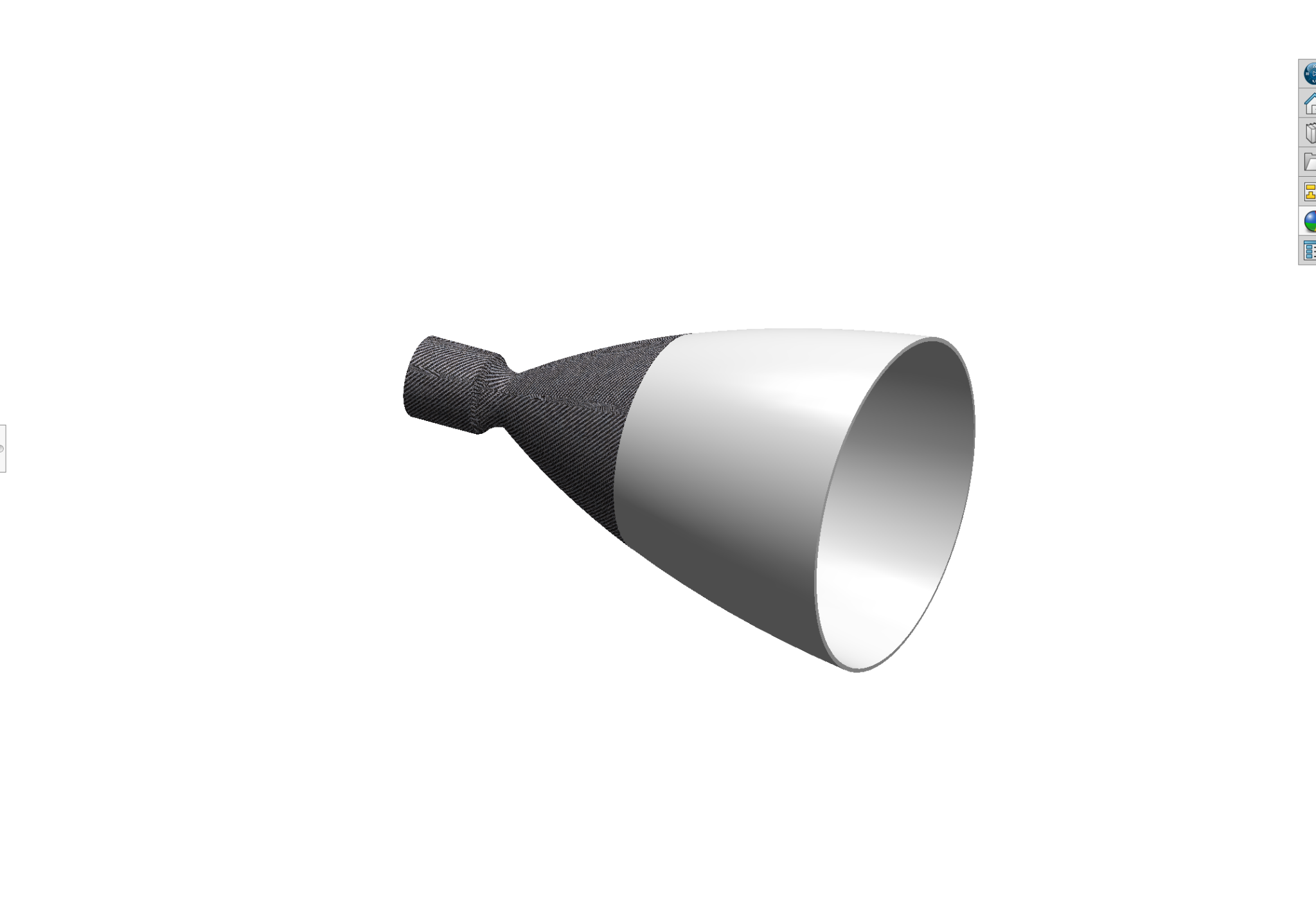 FIG. 01 / HYPERGOLIC ENGINE CONCEPT
Propellant injector lead for a methalox torch igniter developed in partnership with Intuitive Machines.
Our team is developing an oxygen–methane torch igniter intended to serve as an ignition source for a main engine and support hot-gas reaction control applications.
My focus is the propellant injector: translating flow requirements into a design approach, investigating injector configurations, and considering how injection interacts with the feed system.
Connect ignition requirements with propellant delivery and operating constraints.
Use MATLAB sizing and injector literature to investigate geometry and flow behavior.
Work within a mentored capstone effort spanning injector, thermal, and fluid-system considerations.
An individual academic design study of a pressure-fed MMH/NTO propulsion system for a large lunar lander.
I connected mission sizing, NASA CEA combustion analysis, injector design, nozzle geometry, and heat-transfer modeling in one iterative workflow.
Read the full project report ↗Download MATLAB source ↓Preliminary values reported in the academic study; not measured or hot-fire-validated performance.
Explore how the analysis informed the design.
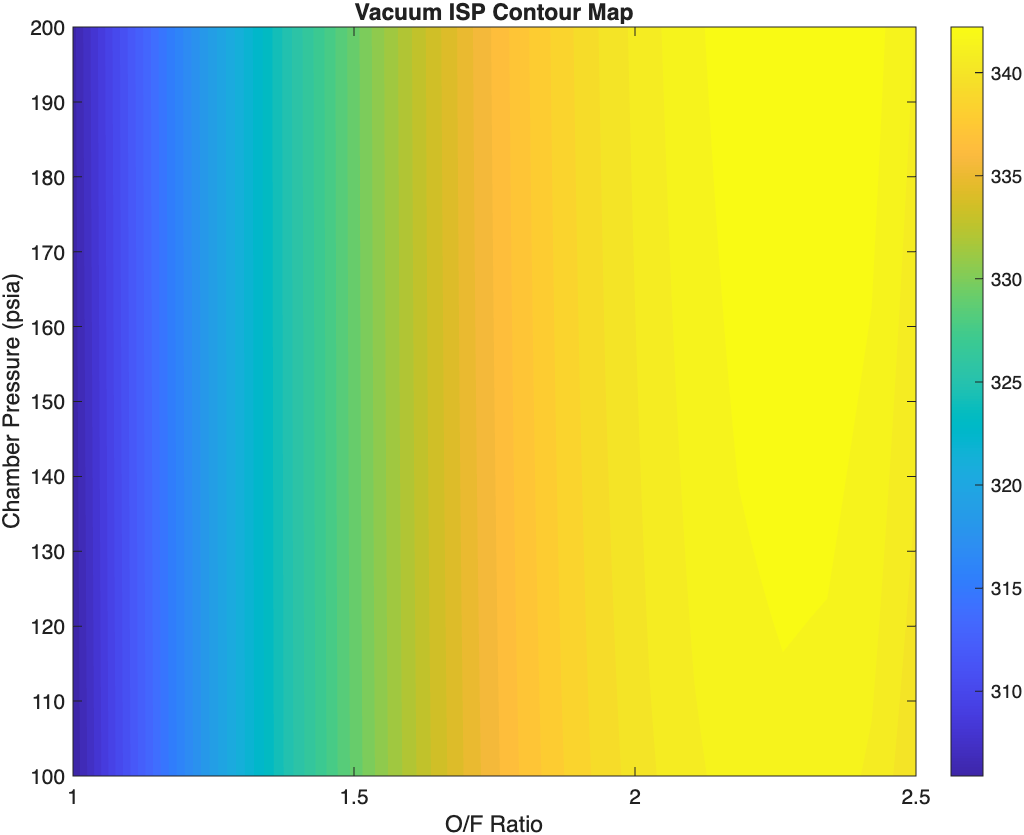
Using a NASA CEA MATLAB wrapper, I swept chamber pressure and oxidizer-to-fuel ratio, tracking specific impulse, characteristic velocity, mass flow, throat area, thrust coefficient, and burn time.
The reported sweep showed greater performance sensitivity to mixture ratio than chamber pressure. The study selected an O/F ratio of 2.27 and a chamber pressure of 100 psia.
[~,of_index]=max(ISP_vals(2,:)); % s, vacuum ISP and its maximizing index
of=of_vals(of_index); % O/F ratio at ISP maximizing index
The script locates the maximum vacuum specific impulse from the mixture-ratio sweep and retrieves its corresponding O/F ratio.
Original excerpts from mech590_engine.m. The full script requires the CEA MATLAB interface and thermo_lib.mat; these dependencies are not included. Figures above are from the original report.
The thermal analysis reduced estimated specific impulse from 342 s to 339 s after accounting for film cooling. That updated estimate fed back into mission and propulsion sizing—linking component analysis to the overall design.
Solar thermal modeling in the context of data-center waste-heat recovery and organic Rankine cycle research.
I developed a Python notebook to investigate evacuated-tube collector performance, combining weather inputs, solar position, heat-transfer correlations, and collector configuration models.
Download the research notebook ↓Use pvlib to calculate solar position and plane-of-array irradiance from location and weather data.
Estimate heat losses, collector efficiency, useful heat gain, and outlet temperature.
Propagate temperature through series-connected tubes and compare flow rate and inlet-temperature cases.
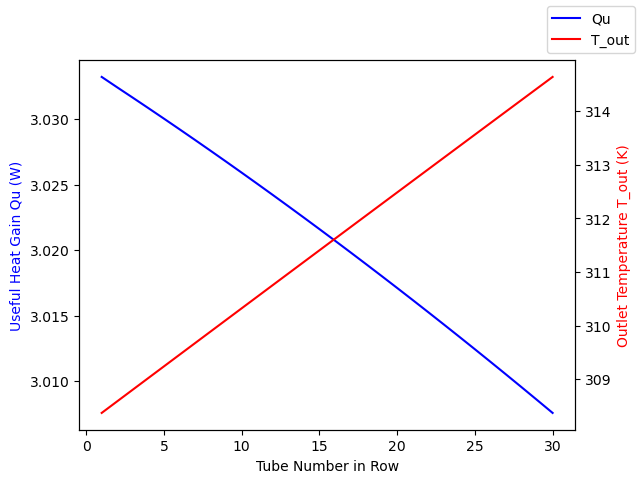
The configuration function passes each tube’s outlet temperature into the next tube and aggregates useful heat gain across parallel rows.
T_out_i = T_in_i + Qu_i / (m_dot_per_row * Cp)
T_out_collector[i] = T_out_i
T_in_i = T_out_i
Qu_collector[i] = Qu_i

Qu_total = sum(Qu_collector.values()) * N_parallel_rows
Excerpt from the supplied notebook. Reproducing its saved plots requires the external weather CSV referenced in the notebook.
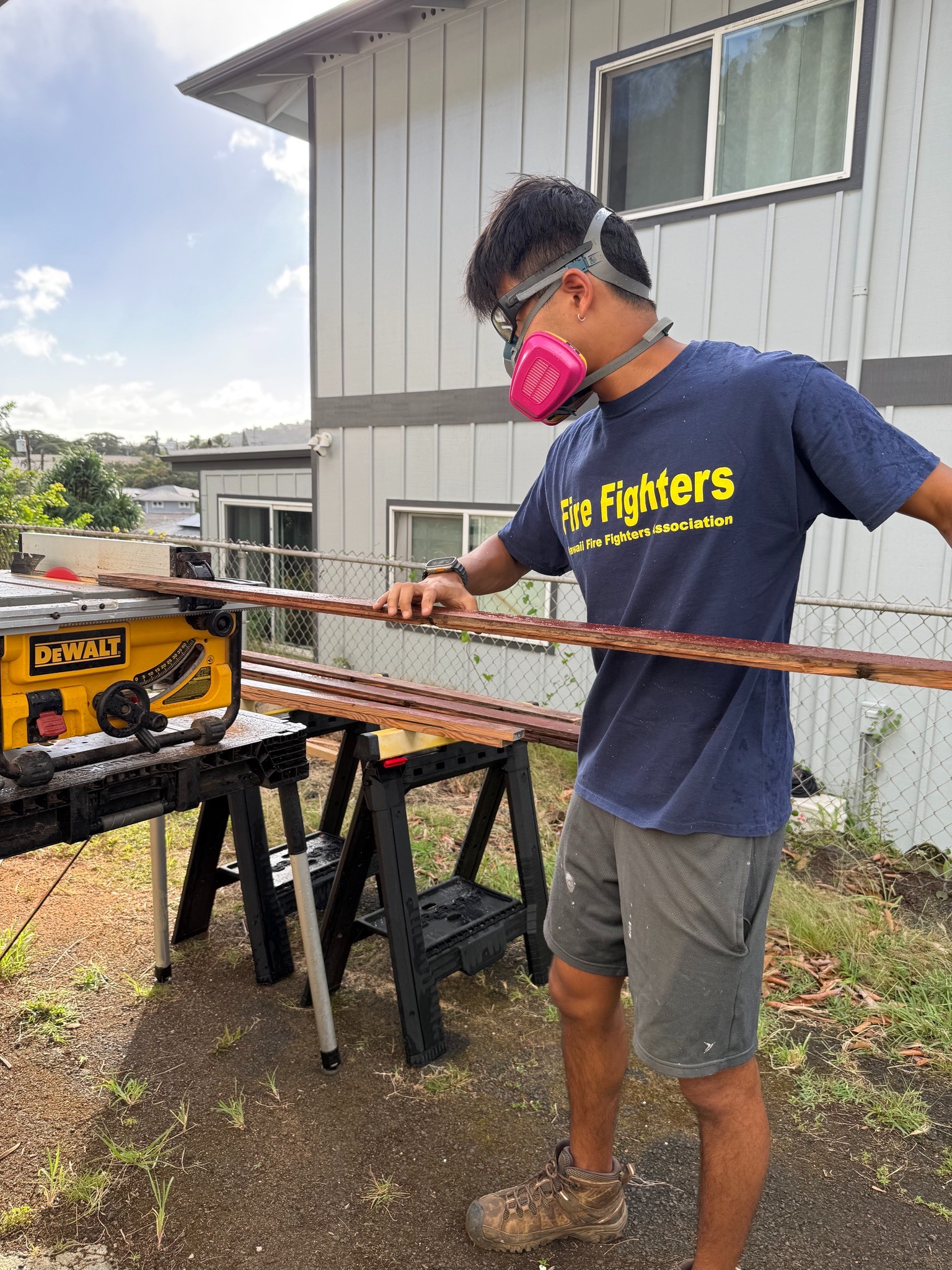
I’m a mechanical engineering student at Rice University, specializing in aerospace and graduating in Spring 2027.
Originally from Hawaiʻi, I’m interested in propulsion and thermal-fluid systems—especially work that connects analytical models with physical design. Alongside project work and research, I’ve gained engineering internship experience at R.M. Towill Corporation and Carollo Engineers, and supported students as a thermodynamics teaching assistant.
Outside engineering, I enjoy surfing, spearfishing, and spending time in the ocean. Growing up in Hawaiʻi made those interests a big part of my life, and I also enjoy hands-on projects that give me a chance to build something of my own.
MATLAB · Python · NASA CEA · Excel
SolidWorks · Civil 3D · Pipe-Flo · Bluebeam
Machining · Welding · 3D printing · Rice Eclipse rocketry